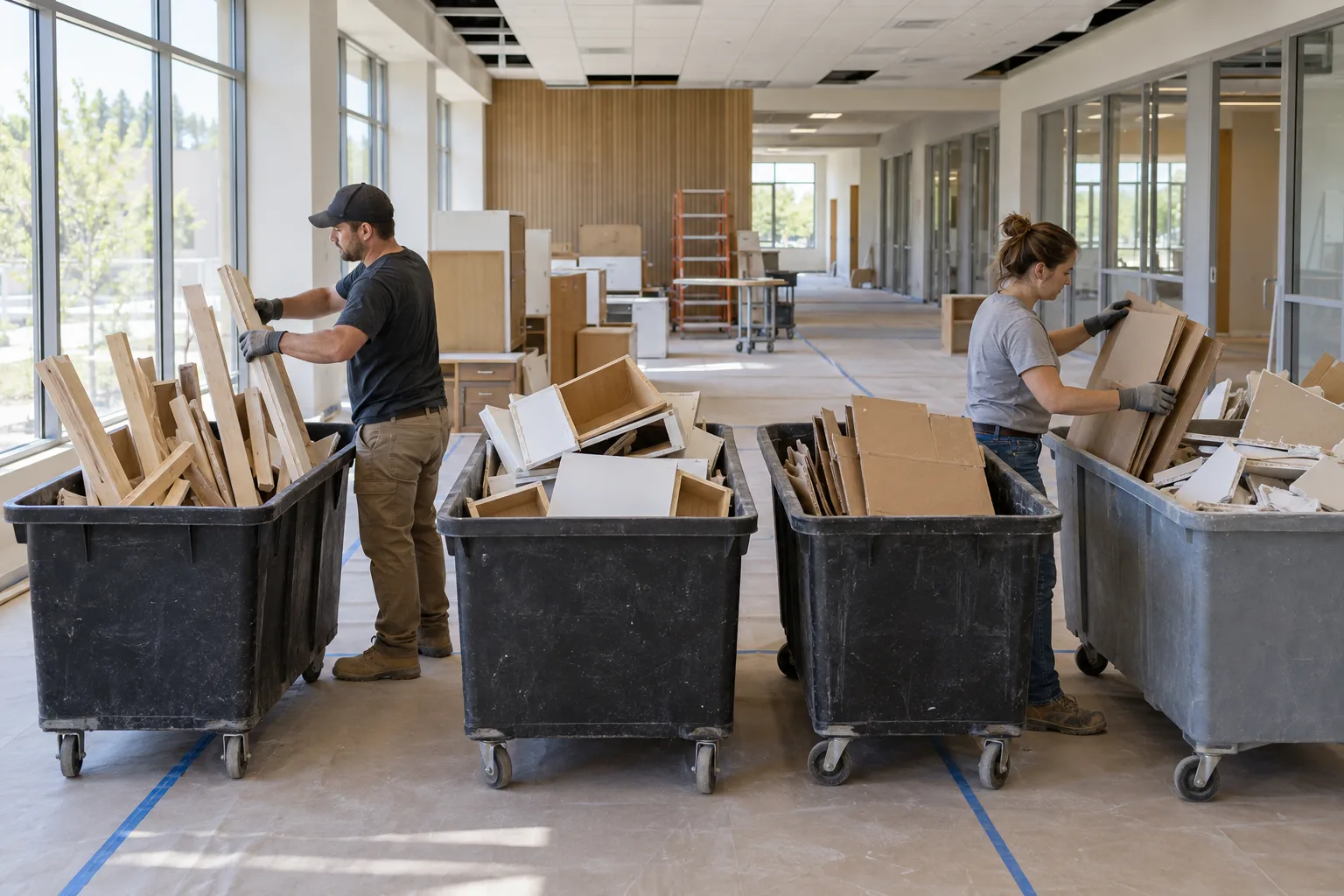
Sort renovation debris at the point where it is created. A clean stream of wood, metal, cardboard, or masonry is easier to describe and may have a different facility path from mixed debris.
Start with the approved list
Write the project materials down before demolition or removal begins. Common nonhazardous streams include lumber, metal, cardboard, cabinetry, carpet, flooring, masonry, and drywall.
Paint, solvents, batteries, lamps, pressurized containers, asbestos-containing material, contaminated debris, and unknown dust stay out of the general load. Stop and identify them through the appropriate project contact.
Keep clean streams clean
Use clearly placed bins or staging zones and prevent food, liquids, sweepings, and mixed trash from contaminating separated material. Keep cardboard dry and flatten it before staging.
Do not overload containers or create unstable piles. Preserve walking routes, fire access, and the finished surfaces that remain.
Confirm local requirements
San Luis Obispo County IWMA notes that CALGreen diversion requirements apply to many projects and advises teams to check the current building-department rules. The project owner or contractor should confirm documentation and approved facilities.
Facility acceptance changes. Contact the receiving facility before hauling and confirm the exact material, condition, load type, and documentation it accepts.
Match pickup to the build sequence
Schedule removal before staged debris blocks the next trade, but after enough material exists to make the pickup practical. For longer projects, use predictable zones and pickup triggers instead of allowing one mixed pile to grow.
Debris stream table
Clean wood: keep free of chemicals and mixed trash. Metal: separate loose sharp pieces safely. Cardboard: flatten and keep dry. Drywall: isolate approved clean pieces. Fixtures: disconnect and release first. Mixed debris: describe exactly what remains.
Sources and limits
This guide uses the published service scope plus current California and San Luis Obispo County waste guidance where relevant. Confirm facility acceptance, building rules, legal requirements, and the actual service scope before work begins.