Office cleanouts with the route worked out first
Plan desks, seating, storage, break-room contents, and released electronics by room so the team knows what moves, what stays, and how it reaches the loading point.
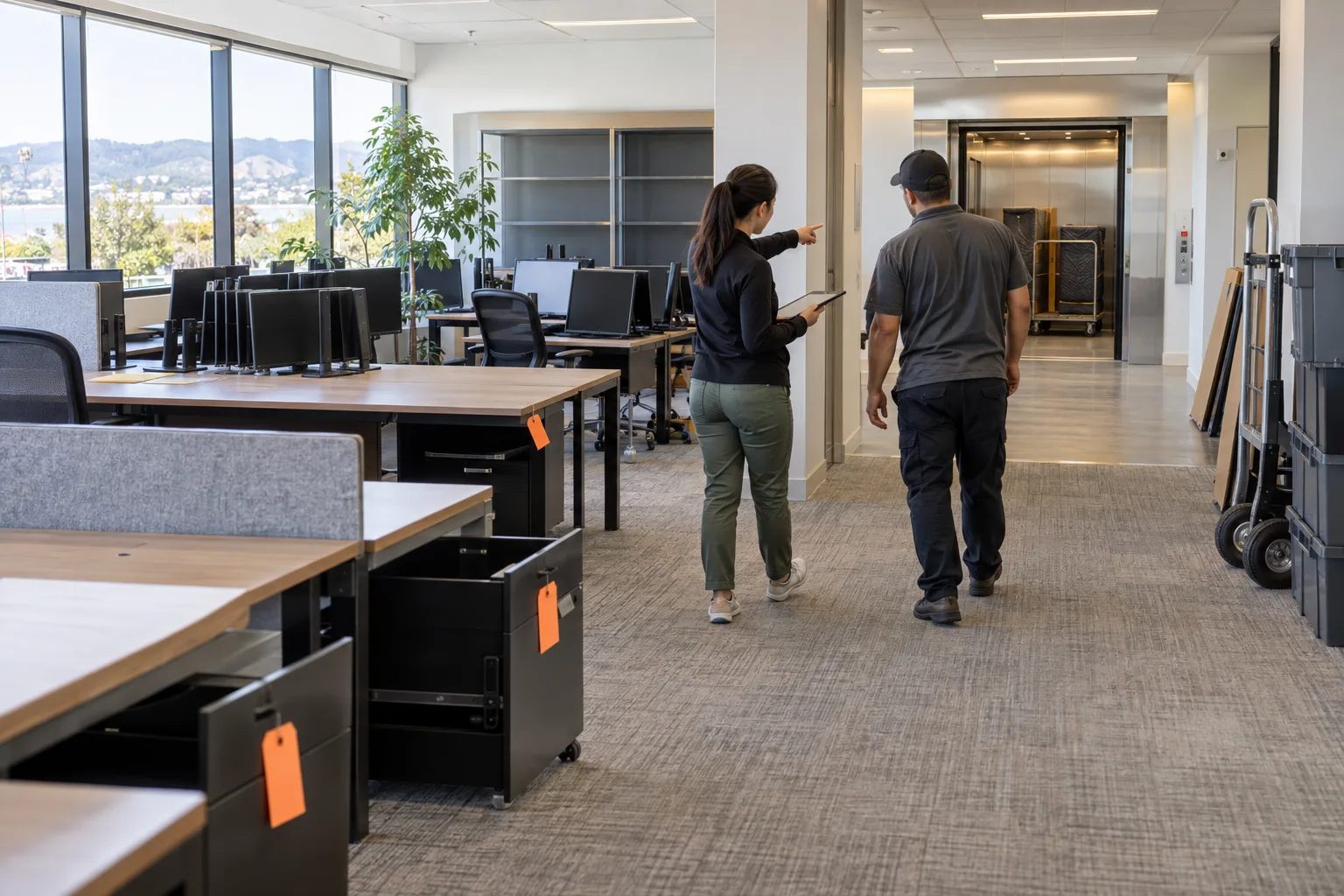
Items and situations in scope
Confirm the exact material during the estimate. The list below describes common approved nonhazardous categories, not automatic acceptance.
- Desks and worktables
- Office chairs and conference seating
- Empty file cabinets and shelving
- Released monitors and office electronics
- Break-room furniture and small appliances

Prepare the property and the route
- 01Mark each room and storage area in or out of scope.
- 02Empty drawers and cabinets; separate records and personal property.
- 03Have IT release electronics and data-bearing devices before pickup.
- 04Reserve the freight elevator or loading area when the building requires it.
What shapes the estimate
Share these details on the first call. Clear inputs reduce surprises when the team reviews the job on site.
Questions about office cleanouts
Do desks and file cabinets need to be empty?
Yes. Emptying furniture prevents personal property, records, and retained items from being removed by mistake and makes the load safer to handle.
Can electronics go with office furniture?
List electronics separately. Data-bearing devices require IT release, and some displays or components may need an approved electronics-recycling route.
What access details matter most?
Share the narrowest doorway, stair count, elevator opening and capacity, loading distance, parking rules, and the hours when the route is available.
Office cleanout checklist: what to decide before pickup
A room-by-room plan for furniture, records, electronics, access, and the final handoff condition.
Read the guideReview the route, then request the estimate
Call with the property type, item groups, loading route, heavy pieces, and preferred timing.