Property cleanouts that fit the turnover sequence
Coordinate bulky-item and nonhazardous-content removal after the property manager has documented the unit, resolved ownership, and defined what the next trade needs clear.

Items and situations in scope
Confirm the exact material during the estimate. The list below describes common approved nonhazardous categories, not automatic acceptance.
- Abandoned furniture after legal release
- Garage, storage, and patio contents in scope
- Bagged nonhazardous household contents
- Freestanding appliances when released
- Office and common-area furniture
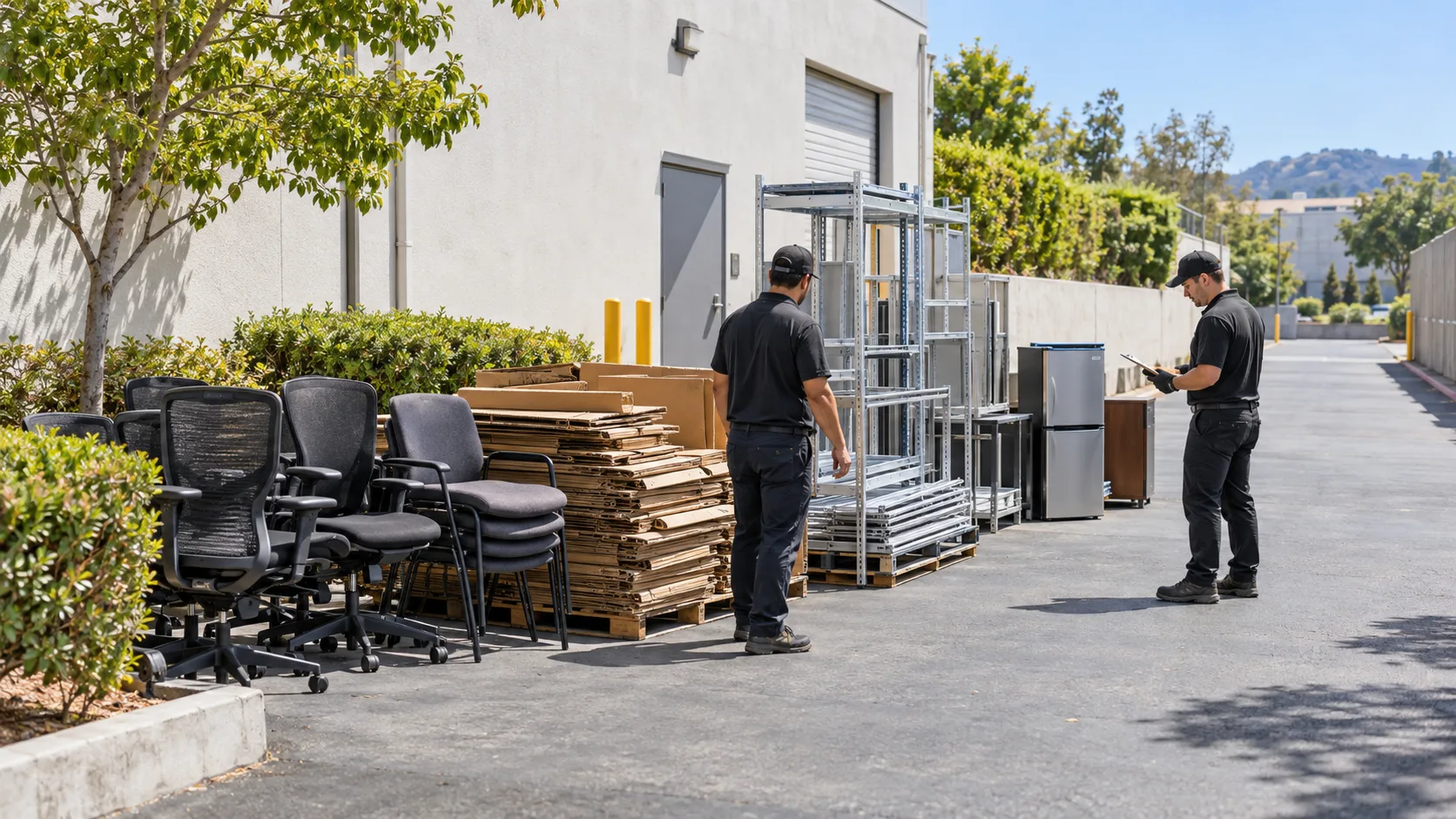
Prepare the property and the route
- 01Complete the inspection and follow applicable abandoned-property requirements.
- 02Photograph and inventory remaining contents before release.
- 03Mark retained appliances, building fixtures, keys, mail, and personal records.
- 04Define the handoff condition for cleaners, painters, flooring crews, or leasing staff.
What shapes the estimate
Share these details on the first call. Clear inputs reduce surprises when the team reviews the job on site.
Questions about property management cleanouts
Can items be removed as soon as a tenant leaves?
The property manager should first complete the inspection, document the contents, and follow the lease and applicable California requirements for property left behind.
What makes a turnover scope clear?
List every room, garage, storage space, patio, common area, and item group. State what remains and what condition the space should be in for the next trade.
Can cleaners and painters work at the same time?
That depends on the route and work zones. Removal usually works best before cleaning and finish work, with a clear handoff between trades.
Property turnover removal checklist for managers
Document what remains, resolve ownership, clear the right spaces, and hand the unit to the next trade.
Read the guideReview the route, then request the estimate
Call with the property type, item groups, loading route, heavy pieces, and preferred timing.