Warehouse cleanouts organized by zone and material
Separate obsolete shelving, empty pallets, packaging, damaged nonhazardous stock, and back-office contents before loading begins.
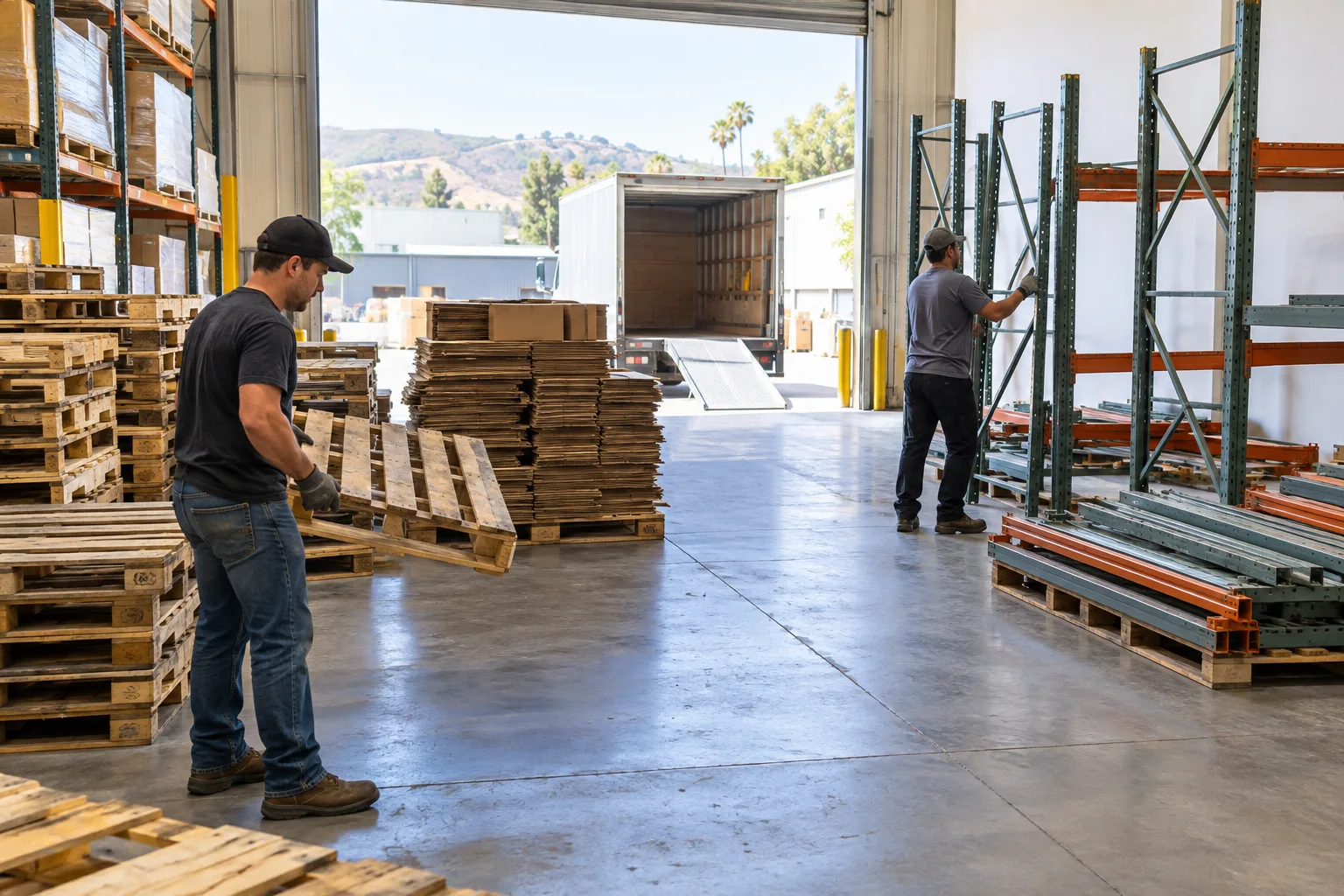
Items and situations in scope
Confirm the exact material during the estimate. The list below describes common approved nonhazardous categories, not automatic acceptance.
- Empty pallets and flattened cardboard
- Freestanding shelving and bins
- Released fixtures and worktables
- Nonhazardous damaged inventory
- Break-room and back-office contents
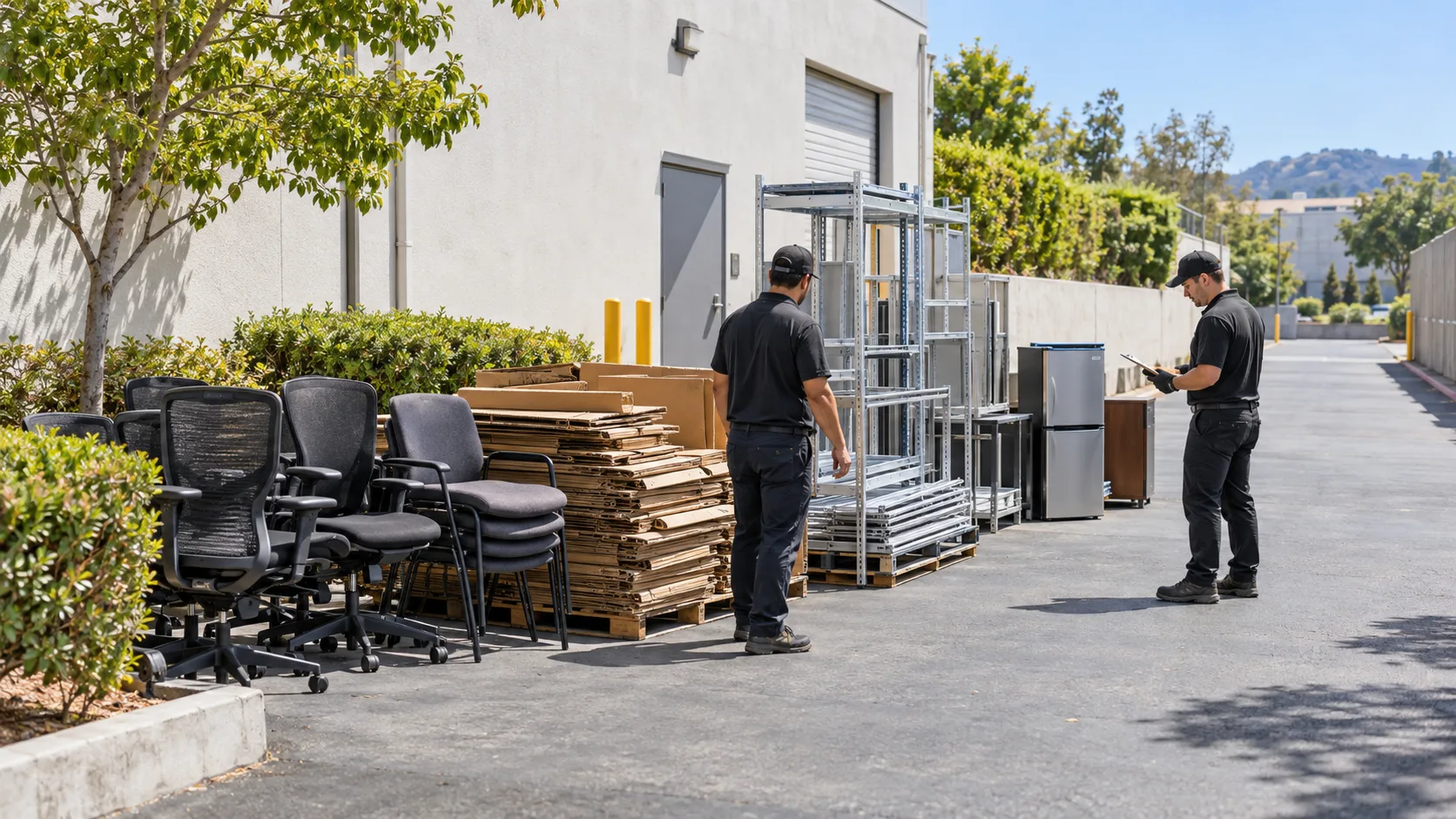
Prepare the property and the route
- 01Map the bays, aisles, mezzanines, yards, and cages in scope.
- 02Separate saleable stock, returns, leased equipment, and unknown inventory.
- 03Confirm whether racks are freestanding, anchored, or part of a separate trade scope.
- 04Keep active forklift routes and emergency exits outside the staging area.
What shapes the estimate
Share these details on the first call. Clear inputs reduce surprises when the team reviews the job on site.
Questions about warehouse cleanouts
Can anchored pallet racking be included?
Anchored or structural rack systems need a separate assessment. Do not assume they are part of a general junk-removal scope.
Should inventory be moved first?
Yes. Saleable, returned, leased, recalled, or controlled inventory should be reconciled before a removal crew handles the remaining material.
How should cardboard and pallets be staged?
Keep them dry, stable, away from exits, and separated from mixed debris. Share approximate counts and access to the dock or pickup point.
How to build a warehouse cleanout zone plan
Separate stock, equipment, pallets, packaging, and debris without blocking active aisles or loading work.
Read the guideReview the route, then request the estimate
Call with the property type, item groups, loading route, heavy pieces, and preferred timing.